

One of the questions I am asked most often is how to clean brass.
The short answer is simple- You do not always need to!
One of the reasons I have always loved working with unlacquered brass is because it changes alongside the people who live with it. Every fingerprint, dinner party, cocktail hour, and quiet morning coffee leaves a subtle mark behind. Over time, brass develops a rich patina that tells a story of use.
To me, that is part of the beauty. Many of my favorite antique treasures are beautiful precisely because they are not perfect. They show signs of life. They feel collected rather than preserved.
Martha Stewart recently shared something I particularly appreciated when discussing brass care. Patina and tarnish are not necessarily the same thing. Patina is often the beautiful character that develops naturally with age, while tarnish is the darker oxidation some collectors choose to remove.
That idea feels very aligned with how I think about Shelton Metal.
Not every mark needs to be polished away, not every surface should look brand new. Sometimes the story is the most beautiful part.
The Lemon Method
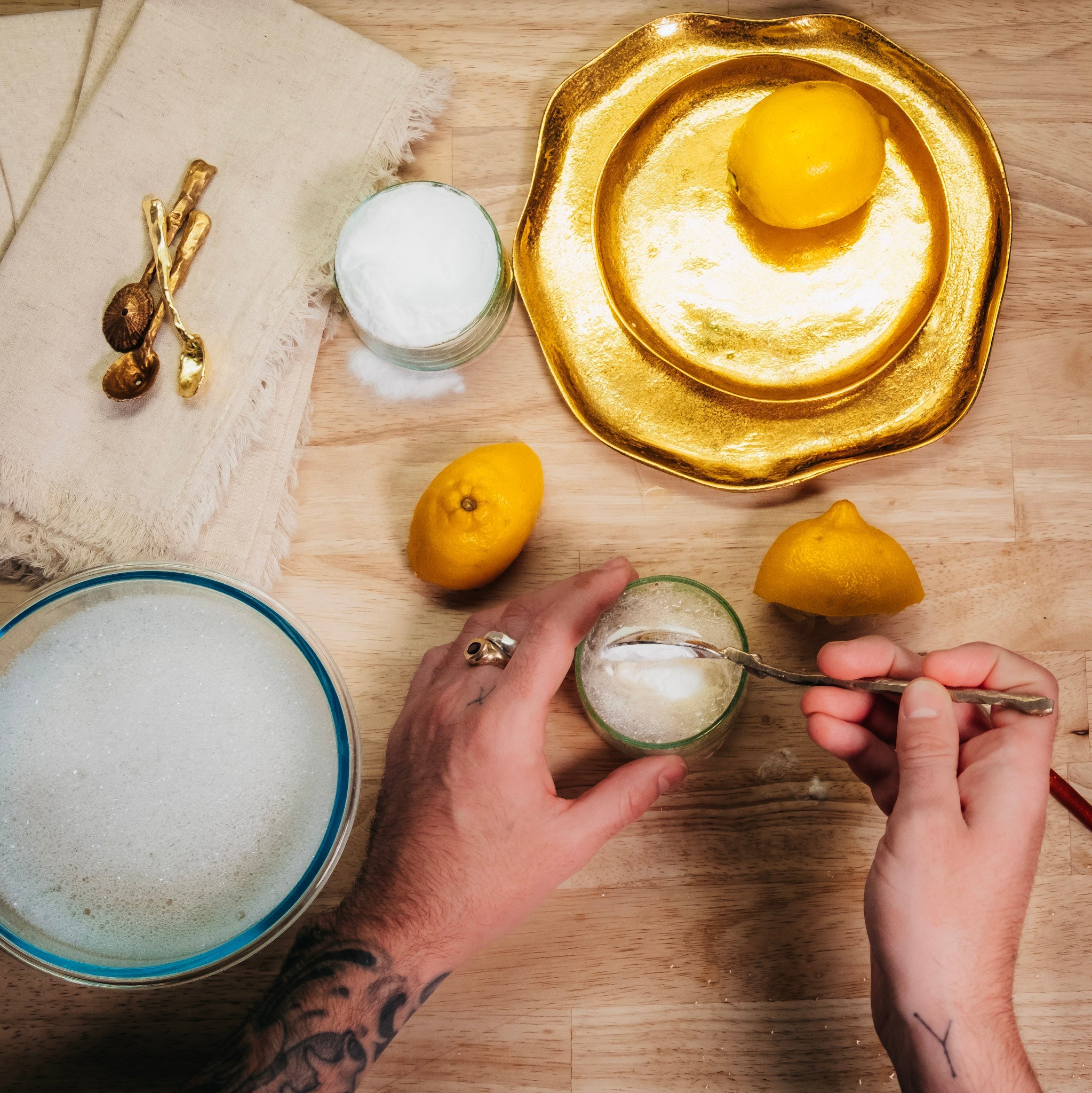
One of Martha Stewart's favorite natural brass-cleaning methods is also one of the oldest. Cut a lemon in half, sprinkle salt onto the exposed fruit, and gently rub it across the brass. The citric acid helps loosen oxidation while the salt acts as a mild abrasive. Afterwards, rinse thoroughly and dry with a soft cloth.
This is often the method I recommend for pieces like our Brass Shell Serving Spoon or Table Bowl when someone wants to restore a brighter finish before entertaining.
There is something wonderfully old-fashioned about polishing brass with a lemon. It feels less like cleaning and more like caring for an object.
Vinegar, Salt & Flour
A simple paste made from vinegar, salt, and flour. Applied gently and rinsed away after a short period, it can help remove heavier oxidation while remaining surprisingly gentle on unlacquered brass.
This method works particularly well on larger pieces, especially if they have developed a darker patina over months of use.
Soap & Water
For regular maintenance- warm water, mild dish soap, and a soft cloth are often all that is needed.
This is how I personally care for my Sand Drip Flatware Set. A gentle wash and thorough drying after use keeps the pieces looking beautiful while still allowing the brass to age naturally.
A Note About Patina
At Shelton Metal, our brass pieces are intentionally left unlacquered.
Whether it is a Shell Serving Spoon passed around at dinner, a Table Bowl filled with citrus on a kitchen counter, or a Sand Drip Flatware Set used nightly, each piece is designed to evolve over time.
The metal darkens. the edges soften, the object slowly becomes your own.
That transformation is not a flaw- It is the object doing exactly what it was designed to do.
The pieces I treasure most are the ones that evolve.
The ones that collect stories.
The ones that reveal where they have been.
So whether you choose to polish your brass back to a bright golden shine or allow it to age gracefully, know that there is no wrong way to live with these pieces.
The best treasures are the ones that become uniquely yours.
X, Colby


